Getting a Tree Removal Estimate from Photos: What to Send
A few good photos and a short note can save you a phone tag and get your estimate moving faster.
October 13, 2026 · 4 min read
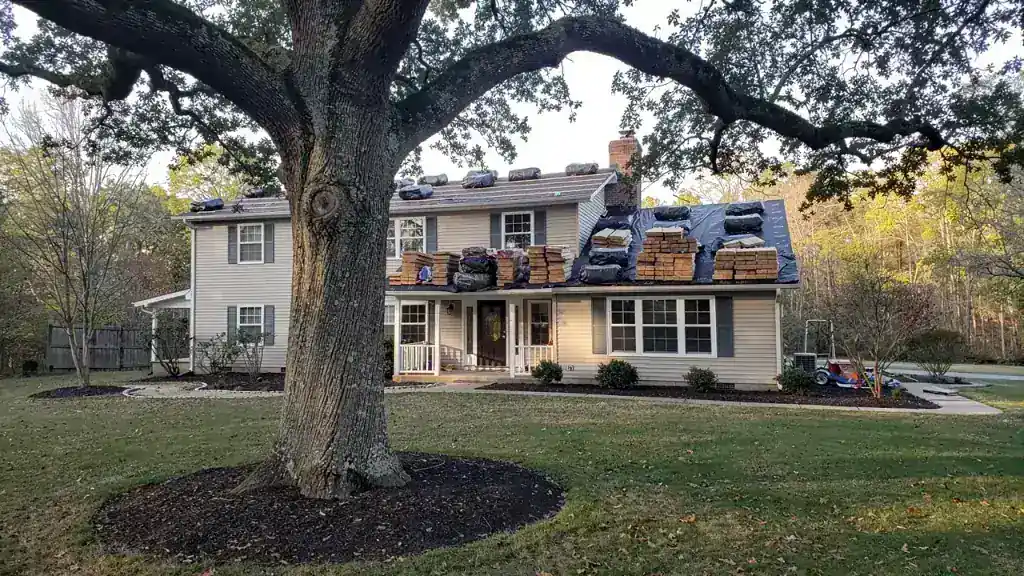
You do not always have to wait at home for someone to show up with a clipboard. Many tree jobs can be sized up from photos and a few details, and that is a convenience if you work all day or want a rough picture before committing to a visit. The catch is that the quality of the estimate depends on what you send. A blurry shot of a green blob tells a tree company almost nothing. This guide covers what to photograph, what to write down, and where a photo estimate stops being enough.
Start with the whole tree
The most useful picture is one that shows the entire tree from top to bottom. Stand back far enough to fit the whole thing in the frame, including the base and the highest branches. If you cannot back up far enough, take two shots, one of the lower half and one of the crown. Try to shoot in daylight, with the sun behind you rather than behind the tree, so the branches are not just a silhouette.
Take at least two angles, ideally from different sides. A tree that looks straight from the street may lean badly toward the house when seen from the side. Two views let the person reviewing the photos judge height, shape, and lean much more accurately.
Show what the tree is near
This is the detail people forget, and it matters a great deal. A tree in the middle of an open yard is a very different job from the same tree six feet from a roof. Include the house, garage, fence, shed, pool, and anything else within reach of a falling limb. A photo that shows the tree and the roofline together tells the story in one image.
Point out overhead wires if there are any. Lines running through or beside a tree change how the work has to be planned, and the crew needs to know before arriving. Do your best to show where the wires run in relation to the tree, and do not go near them to get a closer picture.
Show how a crew and a truck can get in
Access is part of the job. A tree with a clear driveway next to it is easy to reach. A tree behind a locked gate, up a slope, at the end of a narrow side yard, or in a back lot with no vehicle path takes more planning. Take a picture of the route from the street to the tree. Include gates, steps, tight spots, low branches over the driveway, and soft ground that might not hold equipment.
The details worth writing down
Alongside the pictures, a short note answers questions that photos cannot. Here is a checklist you can copy into a text message:
- Your address, or at least the town and street
- Number of trees, and which one is which if there are several
- A rough guess at height and trunk width, even if you are unsure
- Why you want it dealt with: dead, leaning, too close, in the way, storm damage
- Whether it is a full removal or only trimming
- Whether you want the stump ground, left alone, or are undecided
- Whether you want the wood hauled away, chipped, or left
- Any timing pressure, such as a sale, an event, or an insurance appointment
The stump question
Say upfront whether you want the stump gone. It changes the scope of the work, and it is easier to settle at the start than to add on later. If you are not sure, say so, and mention what you plan to do with the spot. Someone planning to plant grass needs a different finish than someone putting down a patio. K&K handles both tree removal and stump grinding, so it can all be scheduled together.
What a remote estimate can and cannot do
A photo estimate is a strong starting point, and for many straightforward jobs it is enough. K&K prices many jobs remotely from project details, and estimates are free. The photos let a crew see the size of the tree, what it is near, and how easy it is to reach, and they let you get an answer without taking time off.
There are limits. A camera cannot see inside a trunk, cannot always judge how a limb is loaded, and can hide a stump flare or a root problem behind a bush. When a tree is large, leaning, close to a structure, tangled with wires, or in a tight spot, an in-person look is the better choice. That visit is not a sales call. It is how the crew checks the things photos miss, from the soundness of the wood to the best place to set up equipment, and it often makes the plan safer and smoother.
After you send the photos
Expect a few follow-up questions. They are a good sign, since someone is thinking through how the work will go. If you are comparing estimates from more than one company, give each of them the same photos and the same description so you are comparing like with like. Ask what is included: cleanup, hauling, chipping, and stump work. Gene B., a K&K customer, wrote: "Came promptly. Left property clean." Ask what the finished yard will look like, because that is part of what you are buying.
K&K Properties & Services Inc. is based at 23 Acri Meadow Road in Enola and serves Harrisburg, Camp Hill and the surrounding area, within approximately 20 miles of Harrisburg. Text your photos and details to (717) 884-2572, or call John with questions. You can also email johnk1168@aol.com. Estimates are free.
K&K Properties & Services Inc., (717) 884-2572
Call (717) 884-2572More articles
Signs a Tree Near Your House Should Come Down
A tree rarely announces the day it turns from shade into risk, but it usually leaves clues you can see from the lawn.
Stump Grinding or Leaving the Stump: What Actually Happens
After the tree is gone, the stump is the part people put off, and it is worth knowing what each choice really means for your yard.