Stump Grinding or Leaving the Stump: What Actually Happens
After the tree is gone, the stump is the part people put off, and it is worth knowing what each choice really means for your yard.
October 13, 2026 · 4 min read
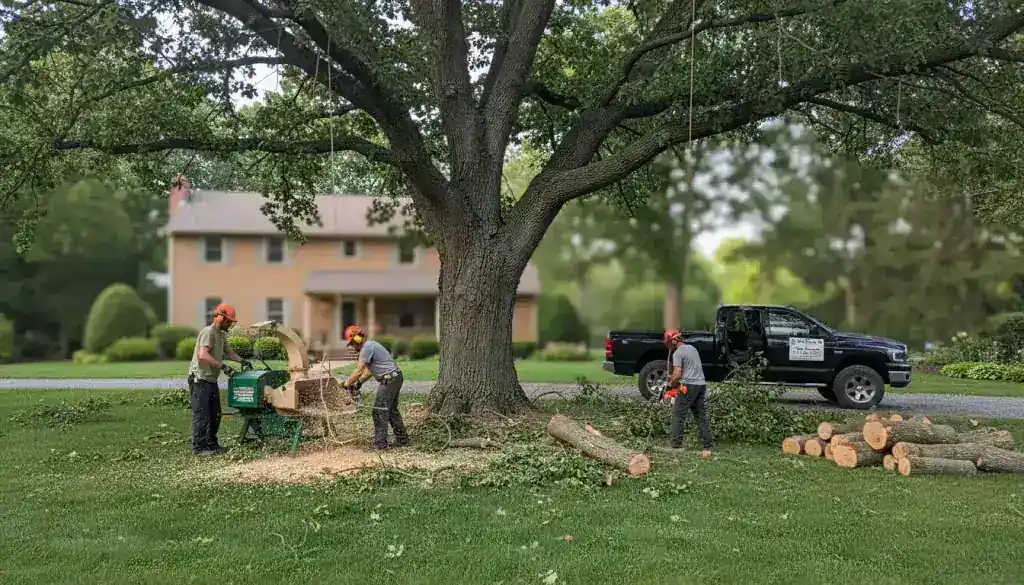
When a tree comes down, the dramatic part is over in a day. What is left is a stump about knee height, and a decision most homeowners would rather not make. It is tempting to say you will deal with it later, and sometimes that is the right call. Other times the stump turns into a tripping hazard, a mowing headache, and a monument to a tree that used to be there. Here is what each option involves so you can choose with your eyes open.
What stump grinding actually does
A stump grinder is a machine with a spinning wheel of carbide teeth. The operator sweeps it side to side across the stump, chewing the wood into chips a little at a time and working down below ground level. The depth depends on the job. For a lawn that will be mowed again, grinding below the surface is usually enough. For a spot that is going to be replanted, paved, or built on, it may need to go deeper.
The result is a mound of wood chips where the stump used to be. Nothing is pulled out of the ground and nothing is burned. The big roots that run out from the stump are usually left in place to break down on their own, which is part of why this is quieter on the yard than digging a stump out whole.
What happens to the hole
Grinding leaves a depression filled with chips. How that gets handled is something to settle before the machine shows up. Some people want the chips hauled off and the hole filled with soil and graded flat so grass can be seeded. Others like to keep some of the chips to use as mulch in a bed. Either is fine, but it helps to say which you want.
Settling is normal. Chips and the roots beneath them decay over time, so a filled hole can sink a little after a season or two, and topping it up with soil later is routine. One K&K customer, Sue B., described how it went for her: "They removed the stumps and filled the holes. It looks great."
If you leave the stump
Leaving a stump is not wrong. If it sits in a back corner beyond the fence line, nobody trips on it, and you do not plan to build there, you may never need to touch it. A stump left alone will decay over many years, and how fast depends on the tree and the conditions. A hardwood stump can hold its shape for a long time.
What you give up by leaving it is a handful of things, and they add up faster than people expect:
- Mowing around it, and the occasional blade that finds it
- A trip hazard for kids, guests, and anyone carrying a laundry basket in the dark
- Sprouts that shoot up from the stump or the roots, which some trees do for years
- A rotting stump that can attract insects and carpenter ants looking for a home near the house
- A spot you cannot plant, pave, or build on until it is dealt with
None of these are emergencies. They are the quiet, ongoing cost of not finishing the job.
When grinding makes the most sense
Grinding is usually the right answer when the stump is in a lawn you mow, near a driveway or walkway, or close to the house. It also fits when you are planning a new tree, a garden bed, a patio, a shed, or a fence line in that spot. If you are selling the house, a clean yard with no stumps is simply easier to show.
It also helps when a tree has just come down after a storm and you want the yard back in order in one visit rather than two. K&K can handle removal, grinding and cleanup together, so there is only one crew coming through and one set of cleanup to coordinate. Tree chipping is part of the same visit, which turns the branches into wood chips instead of leaving a brush pile in the driveway.
Things to settle before grinding day
A few details make the job go better. Walk the property with whoever is doing the work and point out what you want gone and what you want kept. Mention anything buried: irrigation lines, invisible dog fences, garden lights, and any utility lines you know about. Tell the crew where the equipment can reach, because a gate that is too narrow or a steep slope can change how the job is done. Decide ahead of time what you want to happen with the chips and how deep you want the grind to go.
If you are not sure which depth you need, tell the crew what you plan to put there. Someone replanting a lawn has different needs than someone setting a new tree in the same spot.
Getting a quote for your stump
K&K Properties & Services Inc. grinds stumps for homeowners in Enola, Harrisburg, Camp Hill and the surrounding area, within about 20 miles of Harrisburg. Estimates are free, and many jobs can be priced from photos and a few details sent by text, though a visit helps when access is tight or there are several stumps. Call or text John at (717) 884-2572, and tell him how many stumps, roughly how big they are, and what you hope to do with the space afterward.
K&K Properties & Services Inc., (717) 884-2572
Call (717) 884-2572More articles
Signs a Tree Near Your House Should Come Down
A tree rarely announces the day it turns from shade into risk, but it usually leaves clues you can see from the lawn.
What to Do When a Tree or Limb Comes Down on Your House
The first hour after a tree hits the house is mostly about safety, so here is a calm order of operations.